
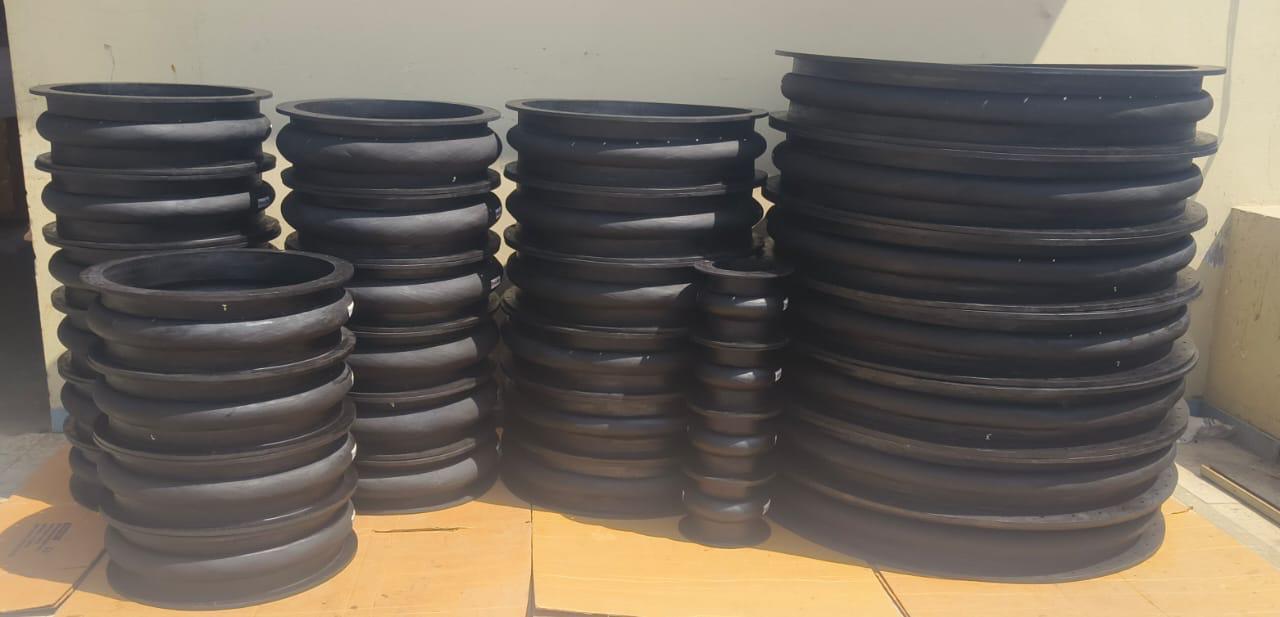
Selection of rubber bellows for power plants requires an application-specific approach. Generic selection methods often lead to premature failure, leakage, or excessive maintenance.
Let’s focus on the key parameters engineers must evaluate when specifying rubber bellows for power plant systems.
Why Expansion Joints Are Non-Negotiable in Water & Wastewater Systems
Water and wastewater treatment plants are among the most mechanically demanding environments in modern infrastructure. Pumps run continuously. Pipes carry chemically treated water at varying pressures. Temperatures cycle relentlessly. And through all of this, your piping system is expected to perform — silently, safely, and without failure.
The component that makes this possible? The expansion joint.
Widely overlooked during design, yet critically essential in operation — the right expansion joint is what separates a reliably running treatment plant from one plagued by leaks, downtime, and costly repairs.
What Do Expansion Joints Do in Water & Wastewater Plants?
Pumps, aerators, and other equipment generate vibrations that, over time, fatigue piping, welds, and supports. Expansion joints absorb this movement so vibrations don’t propagate through the entire system — reducing chances of cracks, misalignments, and mechanical failures.
Beyond vibration, expansion joints in water and wastewater plants are precisely engineered to handle:
- Thermal expansion and contraction — pipes grow and shrink with temperature. Without a flexible joint, this stress cracks welds and damages supports
- Pressure surge management — bellows absorb sudden pressure spikes that prevent pipe bursts.
- Misalignment compensation — correcting minor pipe misalignments during installation and operation
- Seismic movement — facilities in seismic zones benefit from joints that can flex and shift with movement, acting as safety buffers and reducing strain during earthquakes and ground shifts
- Noise reduction — dampening mechanical sound transmission across connected systems
Rubber vs. Metallic Expansion Joints — Which Is Right for Your Plant?
Rubber expansion joints are the standard choice for pump connections and general piping in water and wastewater treatment plants, handling vibration and thermal movement effectively.
Rubber joints are specifically designed for pumping systems, chillers, and water/wastewater treatment plants, offering good sealing, water resistance, and longevity in the right environment — often maintenance-free.
Metallic bellows step in where rubber reaches its limits — handling temperatures from cryogenic to over 800°C and meeting EJMA, ASME B31.1, and B31.3 standards for high-pressure and high-temperature applications.
Quick Selection Guide:
| Requirement | Recommended Joint |
| Pump connections, vibration isolation | Rubber Expansion Joint |
| Corrosive wastewater, chemical exposure | EPDM or Neoprene Rubber |
| High pressure lines | Metallic Bellows |
| Seismic zones | Rubber or Restrained Metallic |
| Sludge transport systems | Reinforced Rubber Bellow |
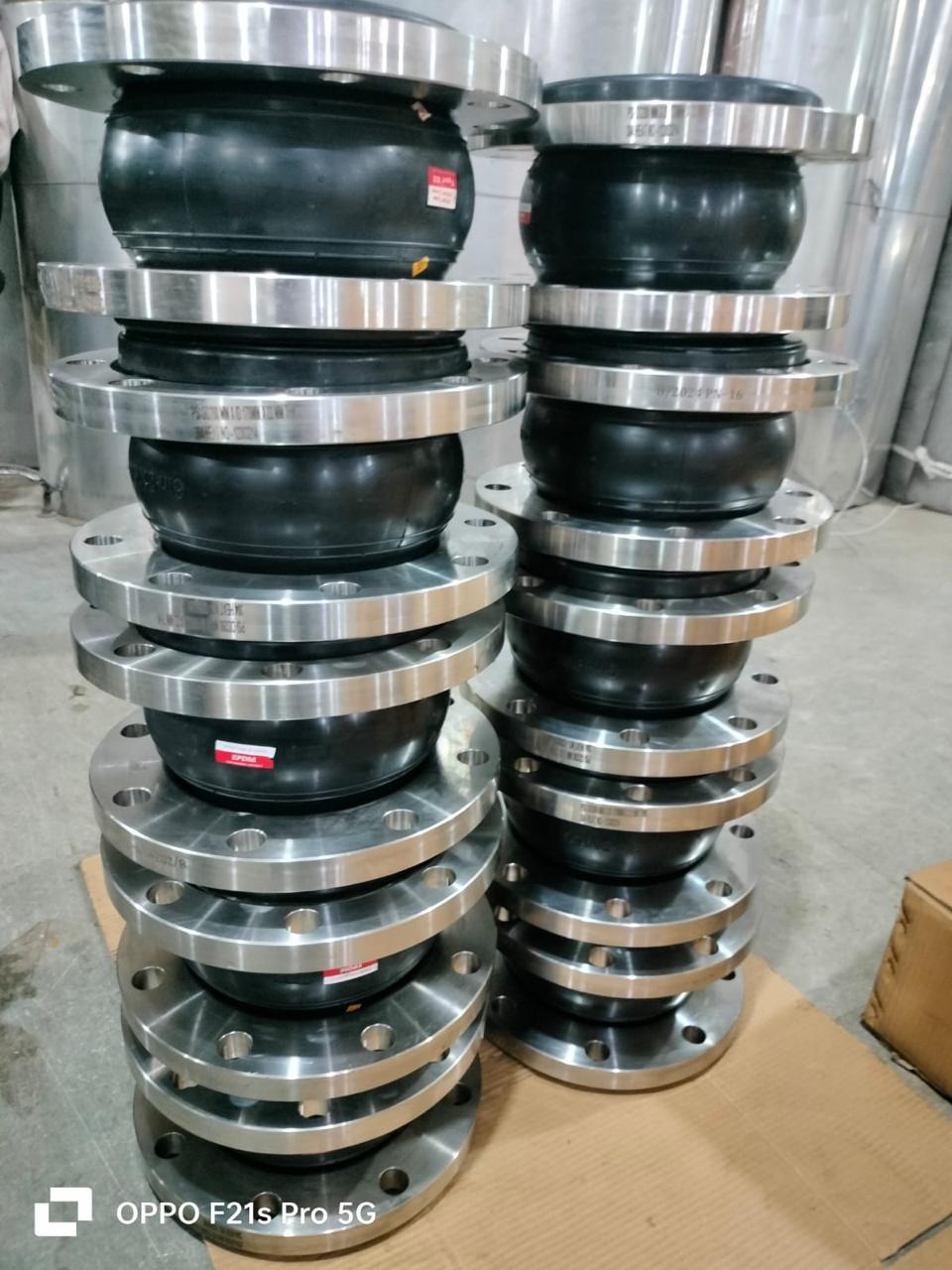
Material Selection — Getting It Right the First Time
EPDM (Ethylene Propylene Diene Monomer) offers excellent resistance to heat, ozone, and aging — making it ideal for water treatment applications. Neoprene resists oil and grease for industrial machinery environments. Nitrile rubber is ideal for applications involving fuels, oils, and hydrocarbons.
For wastewater plants with high chemical or biological loads, high-grade stainless steels like 316L or duplex alloys, or specialised corrosion-resistant materials are often required — with surface finish, weld quality, and seal design all playing critical roles.
The Cost of Getting It Wrong
A large municipal water treatment plant experiencing vibration and thermal expansion issues installed rubber expansion joints across critical piping sections — resulting in 75% fewer maintenance calls due to pipe failures post-installation.
The lesson is clear: a correctly specified expansion joint doesn’t just protect your pipes. It significantly reduces unplanned downtime, maintenance costs, and system risk across the life of your plant.
Why Engineers Across North America Specify Quality Expansion Joints
The North American water infrastructure market — governed by ASME, AWWA, and EJMA standards — demands expansion joints that are pressure-tested, dimensionally accurate, and material-certified before they ship.
At Easyflex, every rubber bellow and metallic expansion joint is:
- Meticulously hydrostatic pressure-tested before despatch
- Manufactured using precisely selected elastomers matched to your media and operating conditions
- Available in custom sizes for retrofit and new installations
- Compliant with international quality standards
Whether you are an MEP consultant specifying for a new municipal water treatment plant, a contractor sourcing for a wastewater upgrade, or a procurement manager evaluating global suppliers — Easyflex delivers engineering you can rely on.
Talk to an Expansion Joint Expert
📩 Visit: https://easyflex.in/products/rubber-bellows/wide-arch
📧 Email us with your pipe size, media, pressure, and temperature — and our engineers will recommend the right joint for your system, fast.