Blogs»Blog»
MEP Terrace Support Retrofit Case Study
MEP Terrace Support Retrofit Case Study
MEP installations are often exposed to harsh environmental conditions, which is why high‑performance support solutions like EasyFoot Systems Rooftop are essential to prevent corrosion, overloading, and long‑term deterioration.
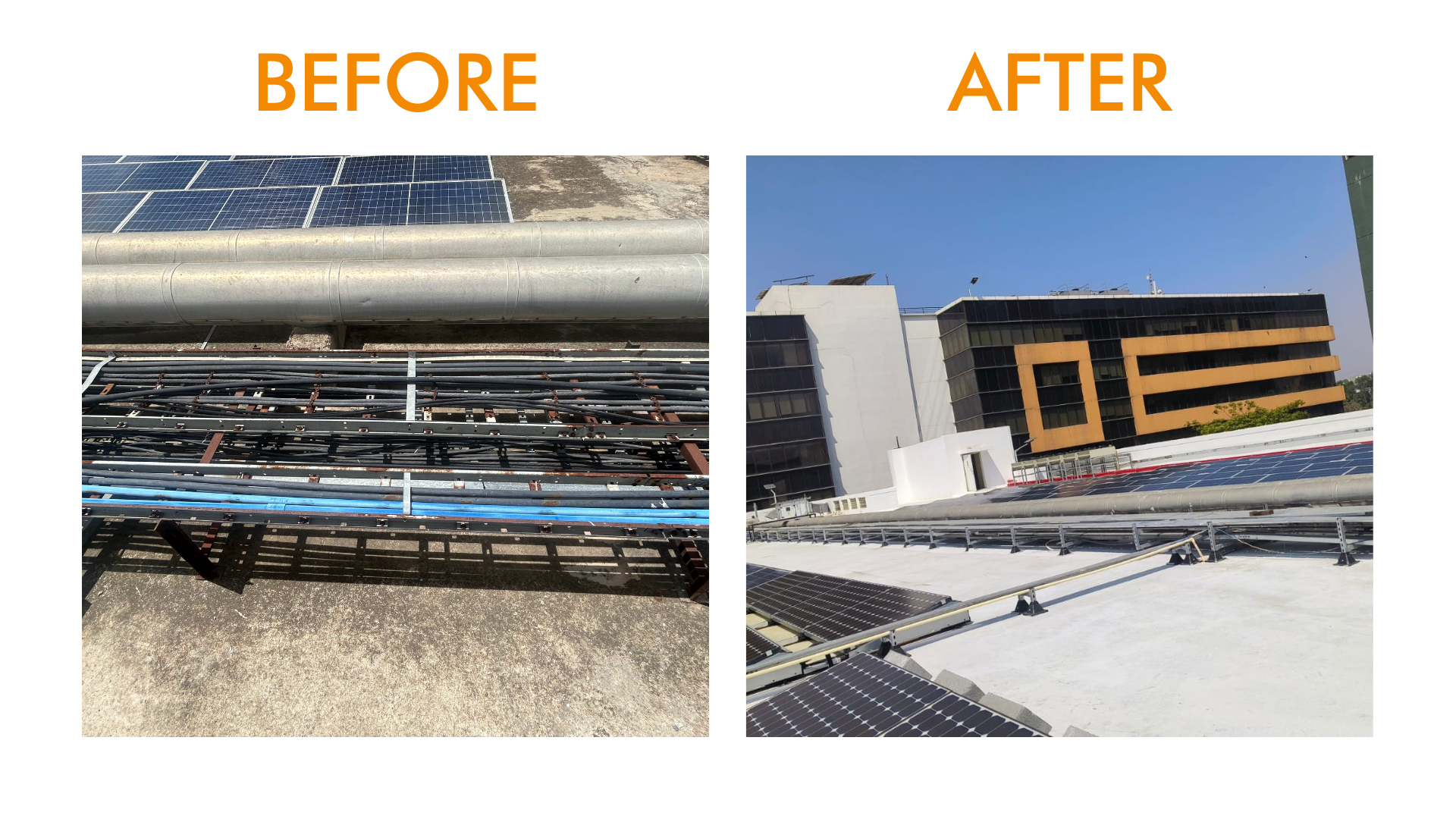
At the headquarters of a Bangalore-based technology firm, aged and corroded roof supports had begun to compromise structural integrity, maintenance access, and future expansion plans. This prompted the need for a structured engineering intervention.
The Challenge
A detailed site inspection revealed multiple issues that required immediate attention:
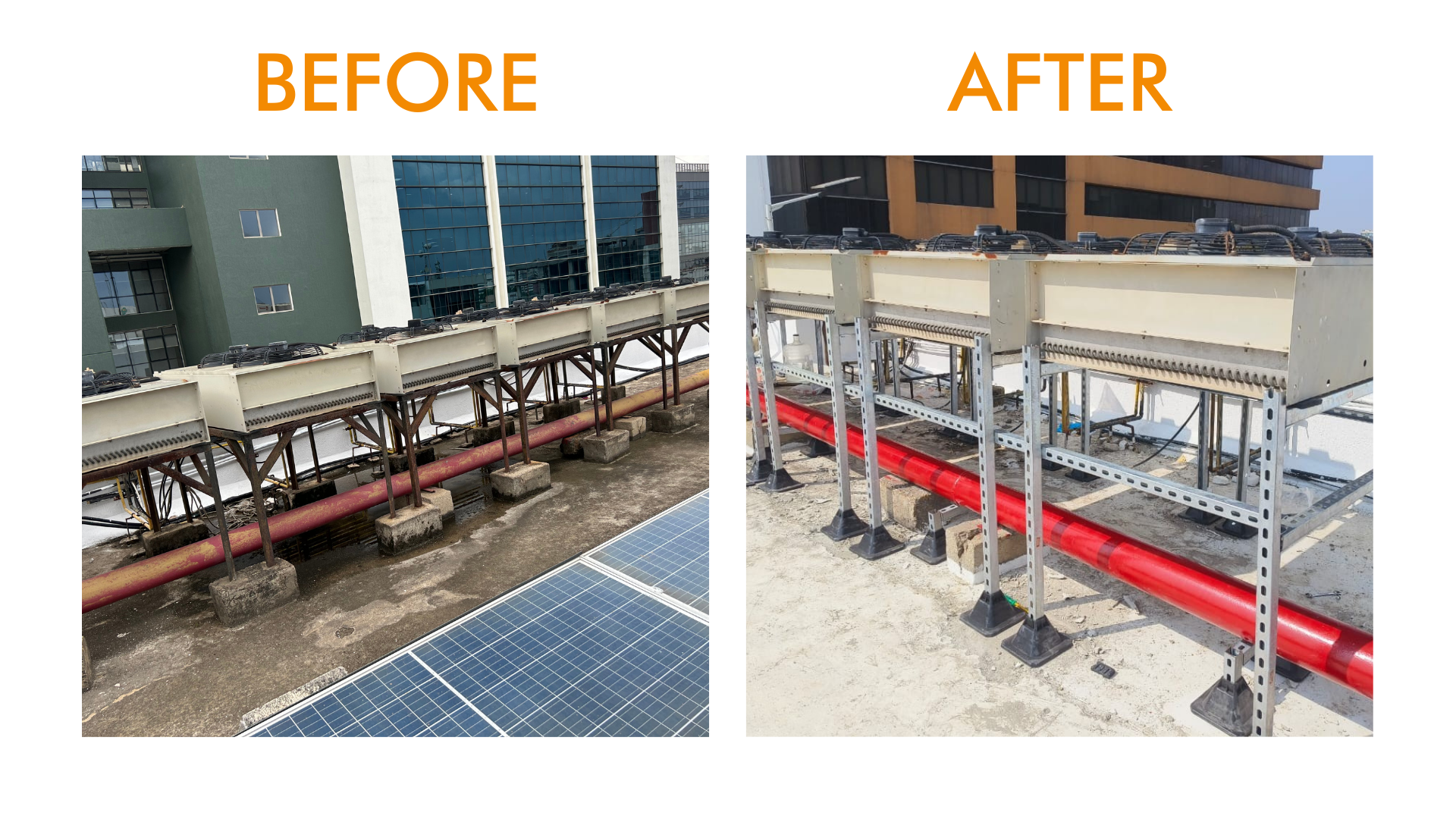
Rusted and deteriorated MS support structures
Use of concrete blocks adding unnecessary dead load on the roof slab
Uneven and sagging supports affecting alignment of services
Poor access for routine inspection and maintenance
Limited flexibility for future MEP upgrades or layout changes
These conditions not only affected the performance of rooftop MEP services but also posed long-term structural and operational concerns.
Why Rooftop Support Failures Are Often Overlooked
In many buildings, focus remains on the performance of MEP equipment, while the support systems beneath them receive little attention. As a result:
Temporary or makeshift supports become permanent
Corrosion progresses unnoticed
Waterproofing is compromised by drilling, grouting or poor fixing methods
Rooftop areas become cluttered and unsafe to work in
Without a planned approach, these problems continue to worsen over time.
The Transformation
The team at Easyflex replaced and upgraded the support structures for:
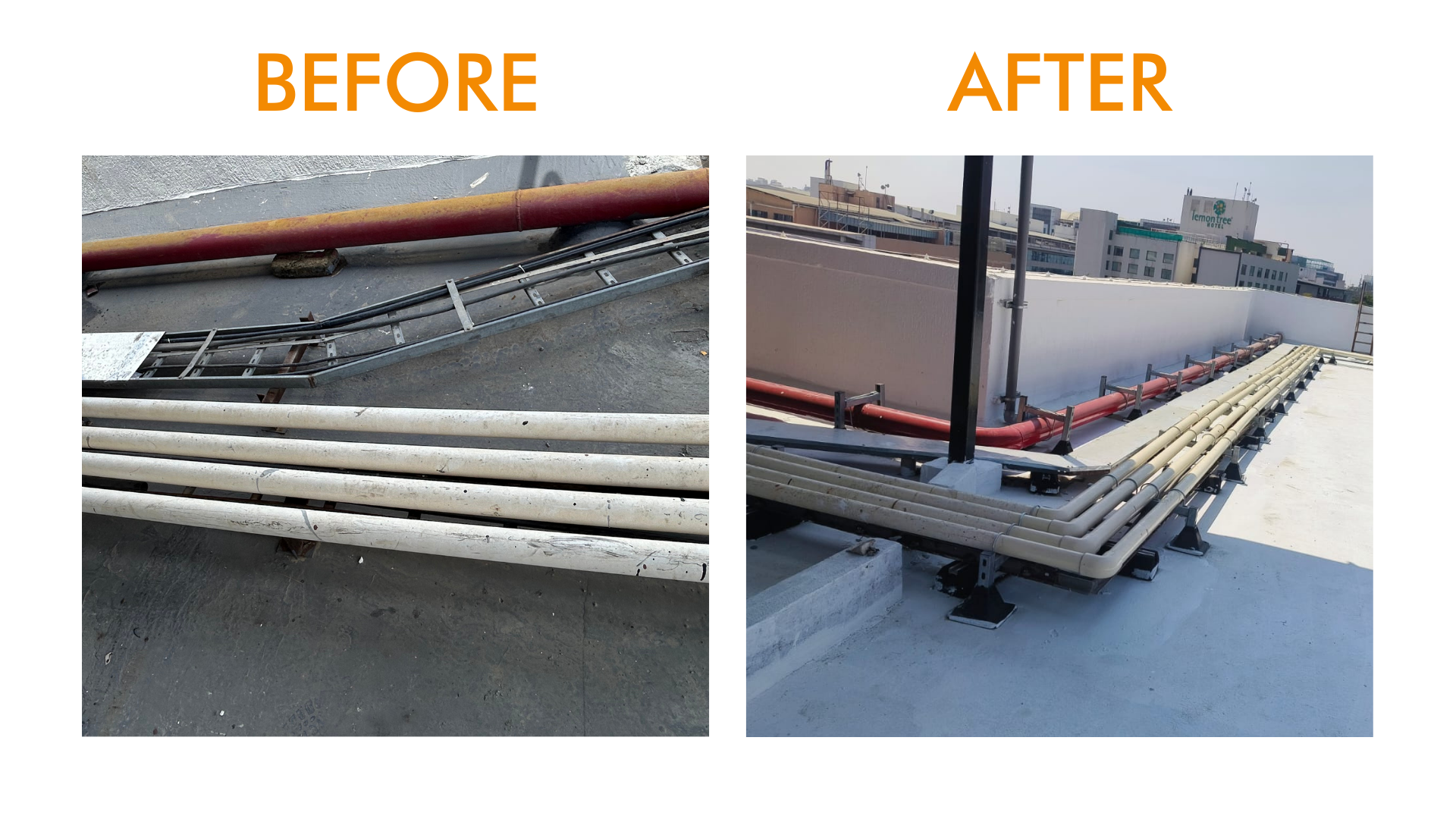
HVAC ducts and cable trays
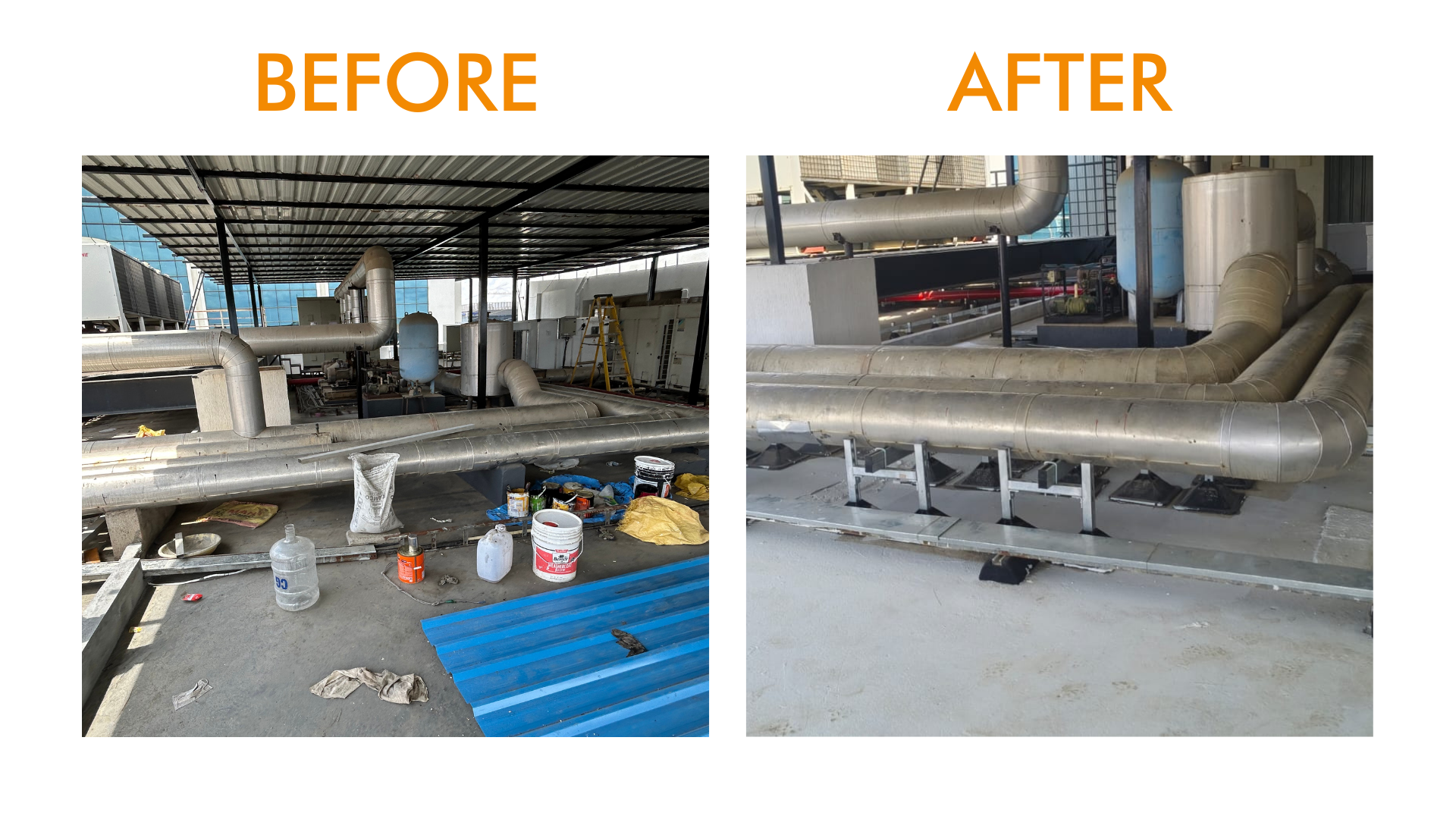
PVC, fire, and chilled water pipelines
Precision Air Conditioning (PAC) units
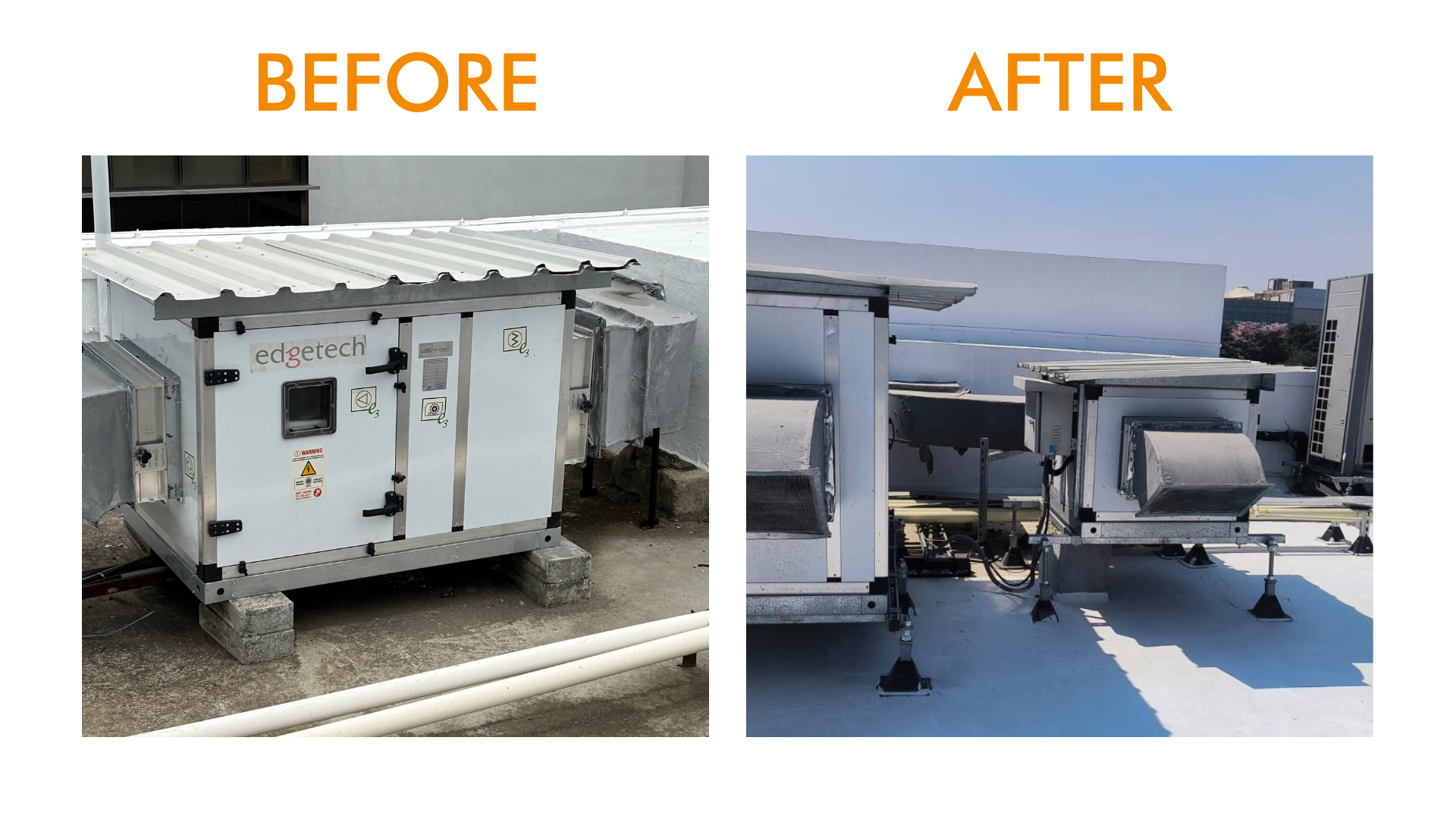
Air Handling Units (AHUs)
VRF / VRV outdoor units
PAC Units: Installed on EasyFoot H-Frame Kit
Cable Trays: Installed on EasyFoot Mini H-Frame Kits
Air Handling Units: Installed on EasyFoot
PVC and Fire Pipes: Installed on EasyFoot Mini H-Frame Kits & Rubber Feet
Chilled Water Pipes: Installed on EasyFoot Mini H-Frame Kits & Rubber Feet
Results Achieved
Following the transformation, the rooftop MEP installations showed clear improvements:
Stronger and more reliable roof support systems
Better load distribution across the terrace
Reduced corrosion related maintenance issues
Cleaner, more organised rooftop service layouts
Convenient and safer access for inspections and repairs
For more details, access the full project case study PDF Clickhere.